My interest in Black dolls began toward the end of 2019, when I read an article about how uncommon Black dolls had historically been and how few had achieved widespread popularity. I thought about all my years going to estate sales and realized I could barely remember seeing Black dolls—unless they were Barbies.
So, at the beginning of 2020, I set out with a simple goal: to find one Black doll that wasn’t a Barbie.
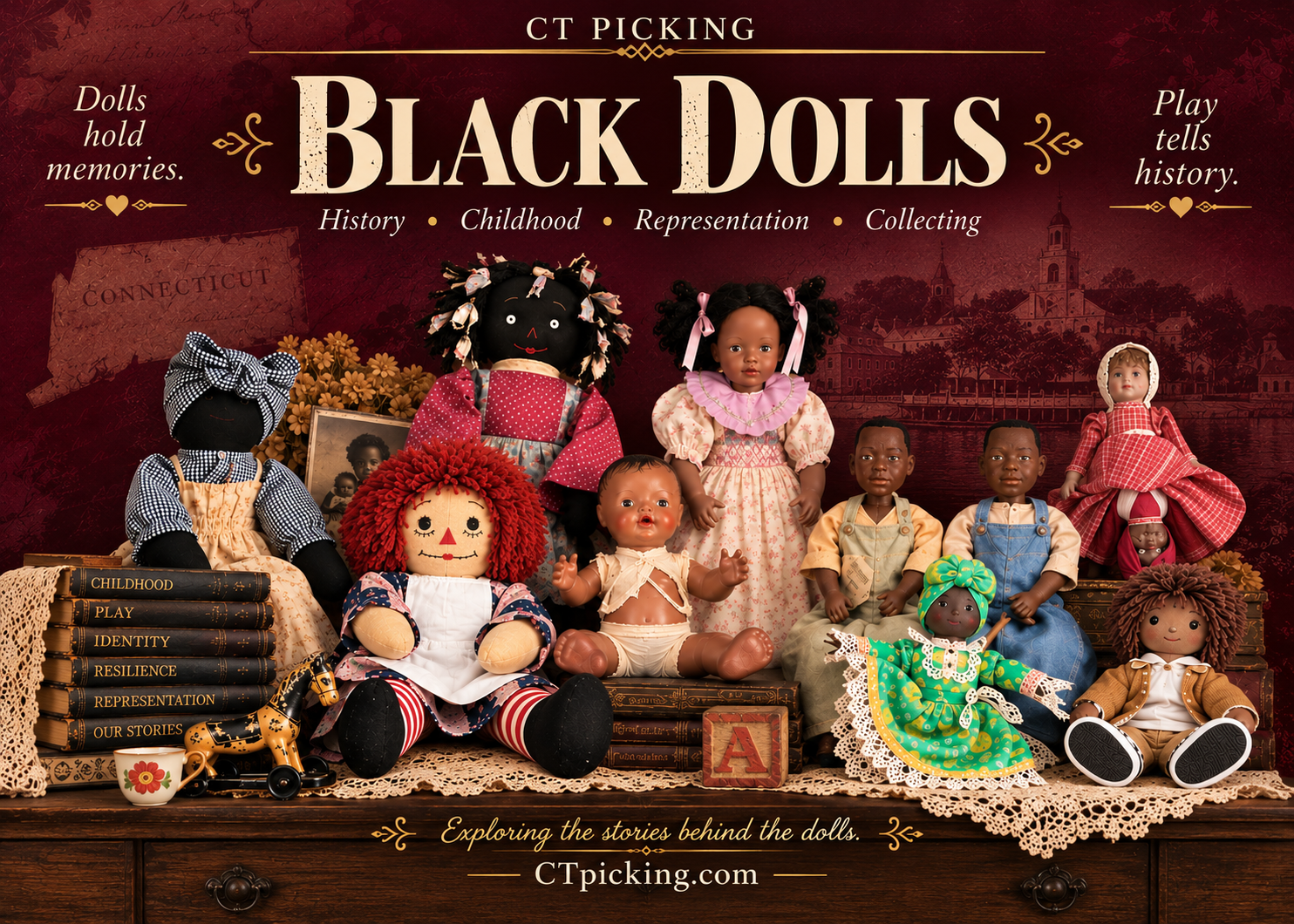
The first ones I found were three soft cloth dolls, and I was so excited to have them. But when I began researching them, I discovered that all three represented racist caricatures of Black people—two were commonly referred to as “mammy” dolls, and the third represented the “pickaninny” caricature.
I was shocked by the history I was holding in my hands.
That changed the way I looked at the dolls. I wanted to understand not just who made them and when, but what they represented and who they were made for. And then, almost as if a door had opened, I just kept finding them. People often tell me I’m not finding the dolls—the dolls are finding me. A little part of me has come to believe that might be true.
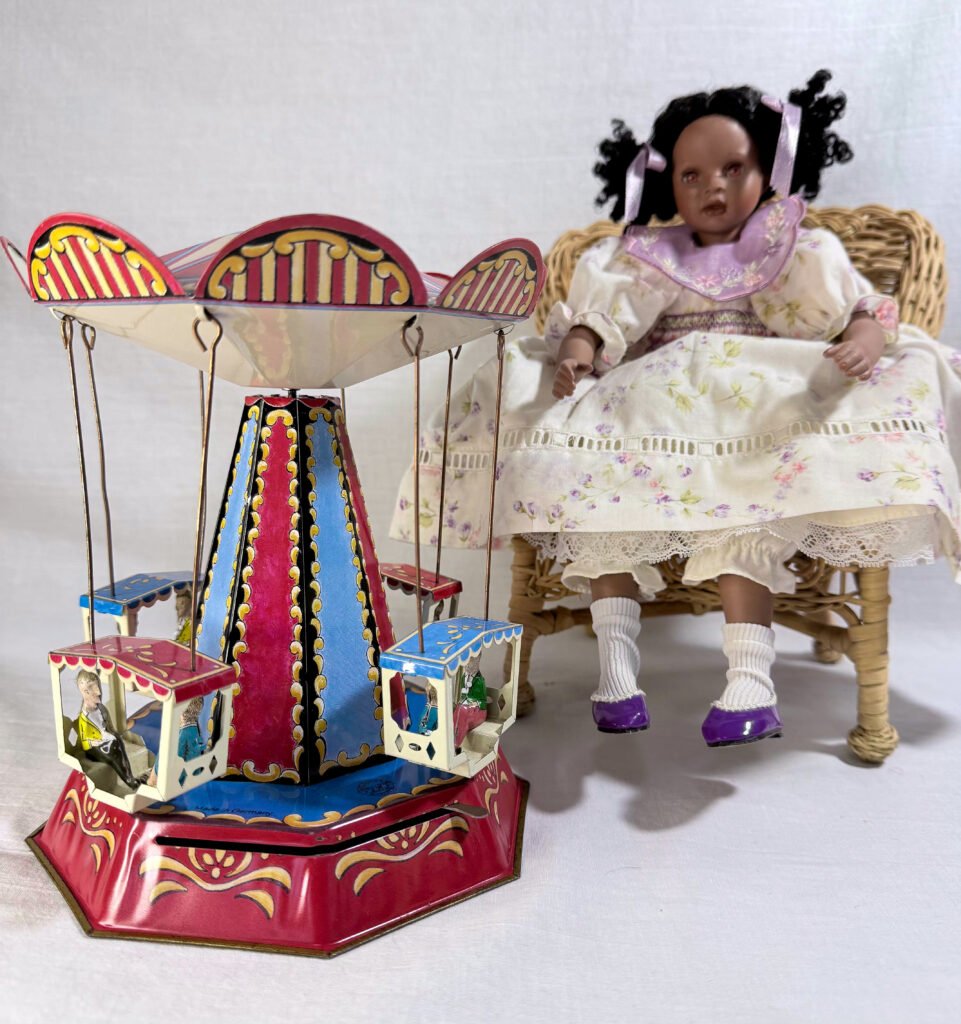
Since 2020, my collection has grown to more than 100 Black dolls. What began with those three troubling examples has grown into a much broader collection that includes beautiful American-made dolls created to positively represent Black people, as well as Black dolls from Africa and other parts of the world.
As the collection grew, collecting became research. I began looking beyond the dolls themselves into the history of Black childhood and play, including the experiences of formerly enslaved children, the development of the American toy and doll industry, and the ways Black people—especially Black women and children—have been represented through dolls and popular culture.
What I found was a history much larger and more complicated than I expected. Black dolls can reflect love, childhood, family, creativity, and pride. But they can also reveal histories of exclusion, stereotypes, racism, and ideas about race taught and reinforced through seemingly ordinary objects.
Today, I approach my collection as both a collector and an independent researcher. The dolls are artifacts, but they are also starting points for understanding the people, culture, history, and stories surrounding them.